
How ACondor Defends Options Trades Under Pressure
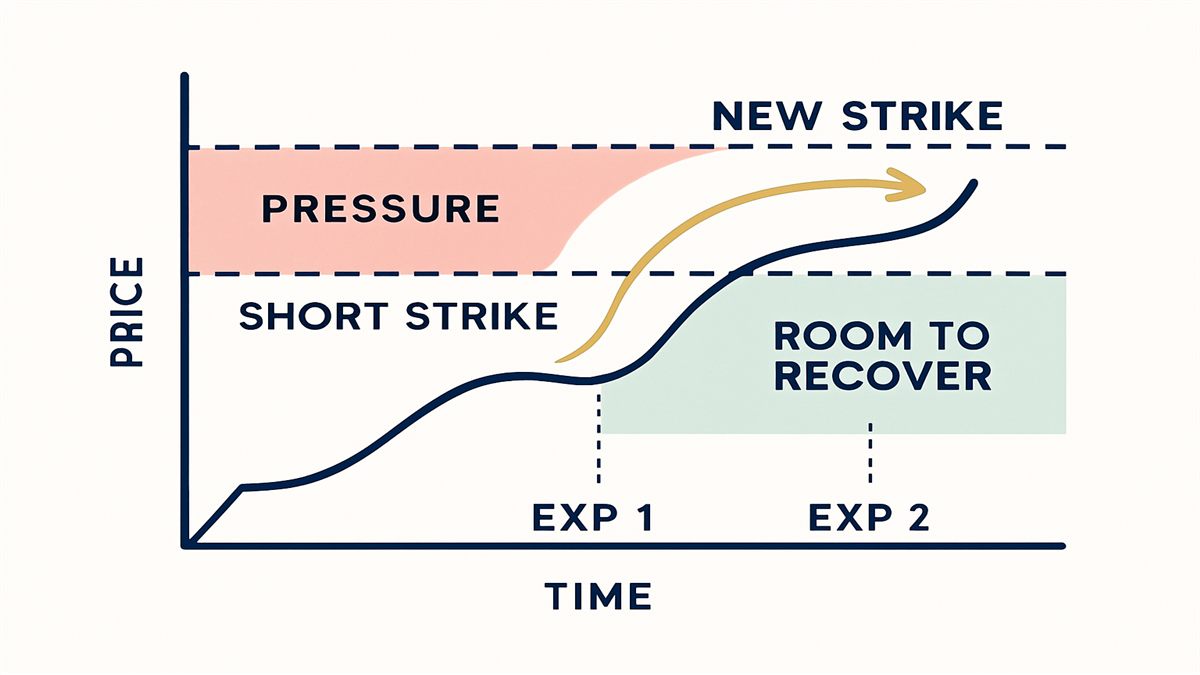
Most options automation is good at one thing: opening trades. The real test comes later, when a position moves against you and something has to decide whether to defend, hold, or close. This post walks through how ACondor defends options trades under pressure, and the supporting systems around it: pricing safeguards, real-time monitoring, exit scoring, and candidate discovery. If you sell premium in a tastytrade account and want to know what the platform actually does with your positions, this is the tour.
A Defense System That Doesn’t Panic
The headline capability is simple to state and hard to build: when a position comes under pressure with plenty of time left on the clock, ACondor does not panic-close it.
Anyone who has sold premium manually knows the failure mode. The underlying makes a sharp move, one side of your iron condor goes deep in the red on paper, and the emotional response is to slam the position shut and take the loss. Most of the time that is exactly the wrong move. Short premium positions recover more often than a mid-trade drawdown suggests, because time decay keeps working and sharp moves frequently retrace.
ACondor’s defense logic is built around patience and credit collection:
- Roll for a credit. When one side of a trade is pressured and there is meaningful time left, the platform rolls the pressured side further out, collecting a net credit on the adjustment. The position gets more room to be right, and the total credit collected on the trade goes up, which lowers the true breakeven.
- Or hold. If a roll doesn’t make sense at current prices, the platform holds the position and lets theta keep working rather than paying to escape a drawdown that may resolve on its own.
- Close early only when it matters. Early closes are reserved for two situations: the position is near expiration, where gamma risk gets real and there is little time premium left to collect, or the underlying makes a genuinely abnormal move that invalidates the trade thesis.
The distinction matters because defense is where premium sellers actually make or lose their edge. Entry criteria get all the attention, but two traders with identical entries and different management will end up with very different equity curves. A system that defends patiently, seeks credits on adjustments, and reserves early exits for cases that truly warrant them is doing the part of the job most traders struggle to do consistently.
Pricing You Can Trust Before You Act
Every management decision, automated or manual, is only as good as the prices behind it. ACondor treats pricing data as something to be validated, not assumed.
Price-sanity safeguards
Before the platform displays profit or loss, or acts on a manual close request, it validates the pricing data it is working from. If a quote is stale or nonsensical, the platform does not present it as truth or trade against it. Decisions are never made on bad prices, which is exactly the kind of protection you want in fast markets, where a crossed or frozen quote can make a healthy position look like a disaster (or the reverse).
Numbers that match your broker
Live open-position profit and loss in the dashboard matches the brokerage’s own numbers. Closed-trade pricing matches the brokerage statement exactly. That sounds like table stakes, but anyone who has run third-party trading tools knows how often the platform’s P/L and the broker’s P/L quietly disagree. With ACondor there is one version of the truth, and it is the same one your broker reports.
A resilient data pipeline
Market data feeds drop. That is a fact of life, not an edge case. ACondor’s market-data pipeline is built to handle feed interruptions without compromising risk calculations, so a temporary outage does not translate into a bad automated decision on a live position.
Real-Time Visibility Without the Noise
Automation you cannot see is automation you cannot trust. ACondor keeps you informed in real time while filtering out the chatter.
Push notifications on the events that matter. Entries, exits, and safety halts arrive as real-time push notifications, so you know what the platform did the moment it did it, without watching a screen.
Low-noise activity monitoring. The activity feed distinguishes real issues from routine, benign events. You are not scrolling past a wall of harmless log lines to find the one entry that matters, and you are not being trained to ignore alerts.
Closed-trade history that tells the real story. When a position closes, the history records the actual reason it closed, such as a news event, not a generic label. Weeks later, you can look at any closed trade and know precisely why the platform exited, which turns your trade history into a usable record instead of a list of fills.
Every Exit Gets a Score
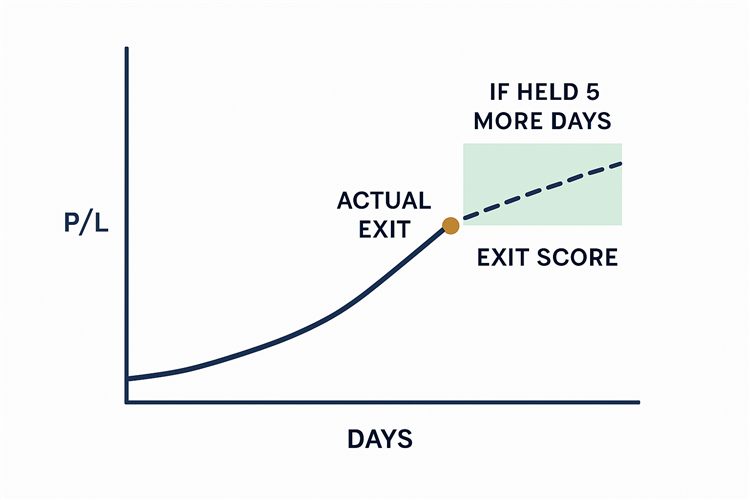
Exit timing is one of the hardest things to evaluate honestly, because you never see the road not taken. ACondor makes that road visible.
The built-in exit-quality tracker scores every closed trade against what would have happened had the position been held five more days. Close a trade and the platform keeps watching, then answers the question every premium seller asks: was that exit early, late, or right on time?
Over a series of trades, this becomes a continuous feedback loop on exit timing. If the system (or you, on a manual close) is consistently leaving money on the table or consistently overstaying, the data shows it. This is the kind of instrumentation most traders never build for themselves, and it compounds in value as trade count grows.
How Trade Candidates Are Found
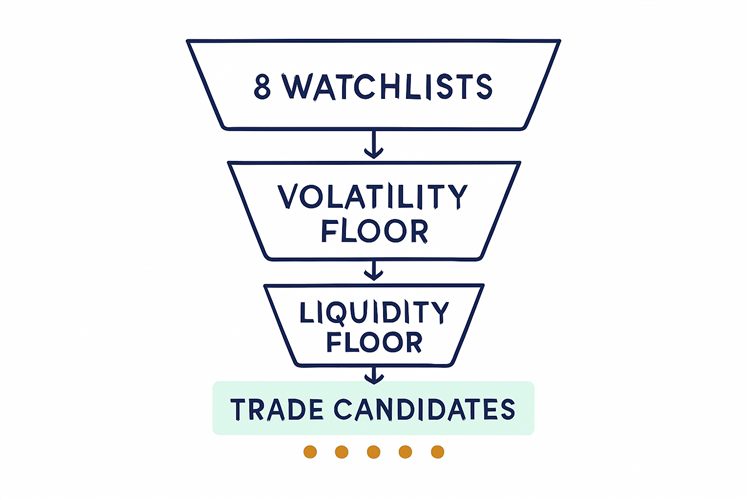
Defense gets the headline, but a premium-selling system also has to keep finding good trades. ACondor runs a daily automatic market scan across eight curated watchlists, giving the candidate pipeline broad coverage without you maintaining ticker lists by hand.
The discovery criteria are live-adjustable from the dashboard: the volatility floor, the liquidity floor, and the source watchlists themselves can all be tuned with no restart required. Tighten the volatility floor when premium is thin, widen the liquidity requirement if you want faster fills, and the next scan uses your new criteria immediately. The how it works page covers the full path from scan to entry.
Per-Account Control Over Strategy Behavior
ACondor is not one-size-fits-all. Advanced behavior is configurable per account, so two accounts on the platform can run meaningfully different playbooks.
That includes control over advanced directional trading settings, including swing-mode targeting, and dashboard controls for news-based entry triggers, configurable per account. The contraction engine has its own dedicated setting for news-entry behavior, so you decide whether news events open the door to entries for that engine or keep it out of headline-driven tape. The settings documentation covers every knob in detail.
The pattern across all of it: automation makes the decisions in real time, and you set the policy those decisions follow.
Frequently Asked Questions
Does ACondor close a trade as soon as it moves against me?
No. When a position comes under pressure with meaningful time left, the platform defends it, rolling the pressured side further out for a credit or holding. It closes early only near expiration or on a genuinely abnormal move.
How do I know the profit and loss numbers are accurate?
Live open-position P/L matches the brokerage’s own numbers, and closed-trade pricing matches the brokerage statement exactly. Pricing data is also validated before it is displayed or acted on, so you are never looking at stale or nonsensical prices.
Can I change scan criteria without restarting anything?
Yes. The volatility floor, liquidity floor, and source watchlists are all adjustable live from the dashboard, and the next scan picks up the new criteria with no restart.
What happens if the market data feed drops?
The market-data pipeline is built to handle feed interruptions without compromising risk calculations, so a temporary outage does not turn into a bad decision on a live position.
Ready to Automate Your Options Trading?
ACondor handles iron condors, earnings plays, and volatility strategies automatically in your tastytrade account. No manual entries, no missed setups.
Join the early access list and be first when we open to new accounts.
Ready to Automate Your Options Trading?
ACondor handles iron condors, earnings plays, and volatility strategies automatically in your tastytrade account. No manual entries, no missed setups.
Join the early access list →