
Options Premium Selling, Grounded in a Decade of Research
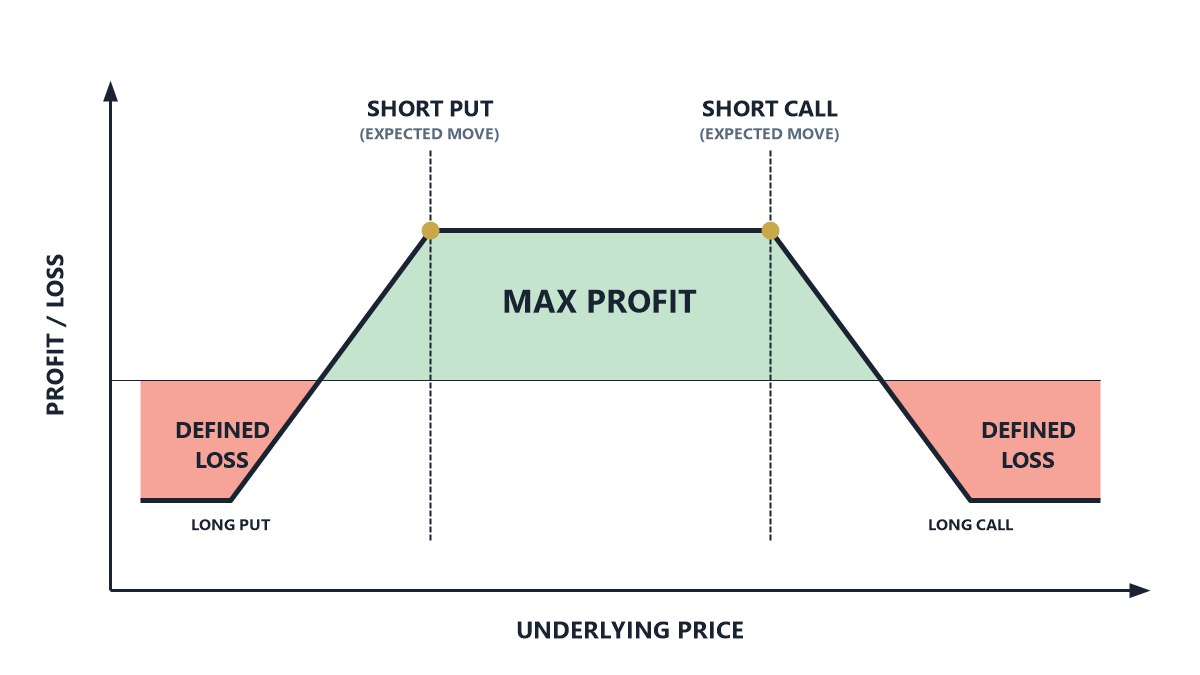
Options premium selling has a decade of published research behind it, and most of that research points to the same posture: sell when volatility is genuinely elevated, place short strikes at the market’s expected move, and define your risk. ACondor’s core income engine is built on exactly that posture. This post walks through how the strategy works, why each piece is there, and how much of it stays under your control.
If you are evaluating whether an automated system deserves real capital, the question is not whether it trades. The question is whether its trading rules come from evidence or from someone’s hunch. Here is the evidence-side answer.
The Research Posture: Sell Elevated Volatility at the Expected Move
The body of published options research built up over the last decade, most visibly the tastytrade and Sosnoff line of work, keeps arriving at a consistent set of findings. Options premiums tend to overstate the moves that actually happen. That overstatement is largest when implied volatility is elevated. And systematic sellers who wait for those conditions, rather than selling constantly, keep more of the edge.
ACondor’s premium-selling engine follows that posture directly, in three specific ways.
It Waits for Genuinely Elevated Volatility
The platform does not sell premium just because the market is open. It waits for implied volatility to be genuinely elevated before entering, because that is when the gap between what the market is pricing in and what tends to happen is at its widest. Quiet, low-volatility stretches are for standing aside, not for forcing trades that pay poorly.
The practical result is a strategy that favors fewer, better-paid trades over constant activity. That runs against the instinct that more trades must mean more income, and the next sections cover why the research says otherwise.
It Places Short Strikes at the Market’s Expected Move
Every option chain implies an expected move: the range the market itself is pricing for the underlying over the life of the trade. ACondor places its short strikes at that expected move, which means the market has to travel beyond its own priced-in range before the position’s short strikes come under real pressure.
This is a deliberate middle path. Strikes placed too close collect more premium but get tested constantly. Strikes placed far outside the expected move rarely get tested but collect too little to be worth the risk. The expected move is where the research says the balance sits.
Wide Wings: Most of the Premium Edge, None of the Undefined Risk
The best-known research results come from undefined-risk strategies like short strangles, which is a problem for most real accounts. Undefined risk means exactly what it sounds like, and it is off-limits in retirement accounts entirely.
ACondor resolves this with wide protective wings. The long options are placed far enough out that they capture most of the premium edge those undefined-risk strategies show in the research, while keeping every position fully risk-defined. The maximum loss on any single trade is capped and known before the order is ever placed, and the structure is retirement-account compatible. If the mechanics of the underlying structure are new to you, the earlier post on how iron condors generate income covers them in detail.
You Control the Strategy’s Geometry
A research-grounded default is a starting point, not a mandate. The geometry of the strategy is tunable per account, directly from the dashboard, with no code changes and no restarts.
Spread width is adjustable in standard $5 strike increments, and the volatility floor that gates new entries is adjustable too. That means you can run one account conservatively, with a higher volatility floor and tighter wings, while another account runs a more aggressive configuration, and both follow their own rules independently.
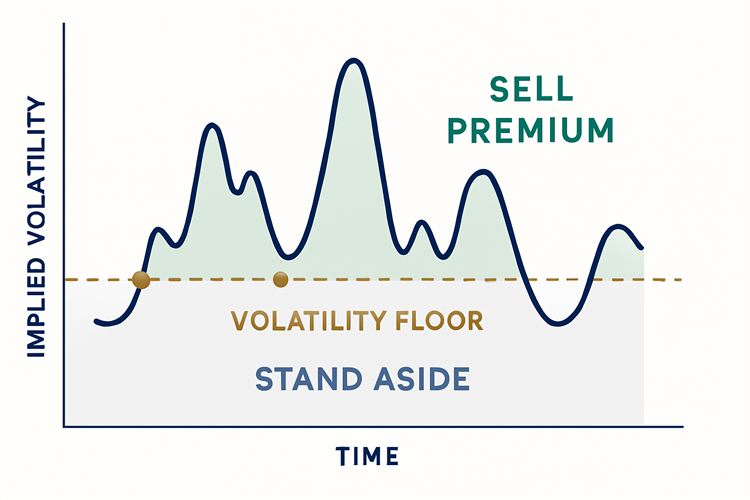
Control extends beyond the trade structure itself. Candidate-discovery criteria, including the volatility floor, a liquidity floor, and the source watchlists the scanner draws from, are live-adjustable from the dashboard. Sector concentration is adjustable the same way: you decide how many open positions the platform will hold in one market sector or theme at a time, globally or per account. How those per-account limits work in practice is covered in how ACondor manages risk across multiple accounts.
Discipline at Entry, Even When the News Is Loud
Finding trades is the easy half of entry discipline. A daily automatic market scan spans eight curated watchlists, so candidate coverage is broad without you maintaining lists by hand, and discovery stays current around the clock, including right after any platform restart.
The harder half is knowing when not to enter. ACondor offers optional news-aware entry protection: when enabled, the platform stands aside instead of opening a new position on a symbol with significant breaking news, and waits for the event to settle. The division of labor here matters. AI classifies the news, nothing more. The trading rule itself is deterministic, and every stand-aside is recorded in the decision log, so you can always see exactly why the platform passed on a candidate.
That is the standard the whole platform holds to: judgment calls are logged and explainable, and no model gets to place or skip a trade on its own authority.
Measured Against Real Data, Every Day
A strategy grounded in published research still has to prove itself on the account it is actually running. ACondor is built to generate that evidence continuously rather than asking you to take its posture on faith.
The platform keeps a daily record of the market conditions it observed and every trade candidate it scored. Strategy decisions get reviewed against real accumulated data, not against memory or anecdote. Alongside that, a parallel paper account runs a control configuration, giving an ongoing A/B comparison between strategy settings on the same market days. When a setting change looks better, there is data showing whether it actually was.
Exits get measured too. An exit-quality tracker scores every closed trade against what would have happened had the position been held five more days. That is a continuous feedback loop on exit timing: not a one-time backtest, but a running score on whether the platform’s exits are leaving money on the table or getting out at the right moment.
And before any change to the trading logic ships, it goes through an independent, structured review covering roll decisions, one-day market-move defense, and portfolio risk sizing. The research sets the posture. The measurement layer and the review process keep it honest.
What Happens After the Trade Is On
Entry is only the first decision. Once a position is open, the platform sizes every trade against the account’s live value and manages the position with the same patience the entry logic shows.
When a position comes under pressure with plenty of time left, ACondor does not panic-close it. It rolls the pressured side further out for a credit, or holds, closing early only near expiration or on a genuinely abnormal move. The full defense playbook is covered in how ACondor defends options trades under pressure. Through all of it, real-time push notifications keep you informed on entries, exits, and safety halts, so the platform never acts without you knowing.
The through-line from entry to exit is the same: rules the research supports, executed consistently, with you informed at every step. The complete engine walkthrough is on the how it works page.
Common Misconceptions About Options Premium Selling
“Premium selling is picking up pennies in front of a steamroller.” That describes undisciplined premium selling: undefined risk, no volatility filter, strikes placed for maximum credit. With wide protective wings capping every trade, entries gated by elevated volatility, and short strikes at the expected move, the steamroller scenario is structurally excluded. The worst case on any trade is defined before entry.
“More trades means more income.” The research points the other way. Selling in low-volatility conditions collects premiums too small to compensate for the risk taken. Fewer, better-paid trades in elevated volatility is the posture the evidence supports, and it is the posture the platform holds even when that means sitting on its hands.
“Automation means giving up control.” The strategy’s geometry, spread width, volatility floor, sector concentration, and discovery criteria are all yours to set, per account, from the dashboard. The platform automates the execution and the discipline. The risk posture stays yours.
Frequently Asked Questions
What does research-grounded actually mean here?
The strategy follows the posture supported by a decade of published options research, most visibly the tastytrade and Sosnoff body of work: wait for genuinely elevated volatility, place short strikes at the market’s expected move, and use wide protective wings that keep every position fully risk-defined.
Is the strategy compatible with retirement accounts?
Yes. Every position is fully risk-defined with a capped maximum loss known before entry, which makes the structure retirement-account compatible, unlike the undefined-risk strategies much of the original research was built on.
Can I run different strategy settings on different accounts?
Yes. Spread width, in standard $5 strike increments, and the volatility floor can be set conservatively on one account and more aggressively on another, from the dashboard, with no code changes or restarts.
How do I know the strategy is actually working?
The platform keeps a daily record of observed market conditions and every candidate it scored, runs a parallel paper account as an A/B control configuration, and scores every closed trade against a five-day hold alternative. Decisions are reviewed against accumulated real data, not anecdotes.
Ready to Automate Your Options Trading?
ACondor handles iron condors, earnings plays, and volatility strategies automatically in your tastytrade account. No manual entries, no missed setups.
Join the early access list and be first when we open to new accounts.
Ready to Automate Your Options Trading?
ACondor handles iron condors, earnings plays, and volatility strategies automatically in your tastytrade account. No manual entries, no missed setups.
Join the early access list →